by Ellie Griffiths – 19013231
Historically within films, studying them has brought up a conceptualised way of looking at the viewing experience – and has done so in very specific ways. There is an idea in Patrick Phillips’ extract from the book, Introduction to Film Studies, where the concept of spectatorship/audiences and how they work is discussed. Within this short essay, I am going to apply these ideas to American dystopian film, The Hunger Games (2012).
The original spectator experience was thought of as linked to ‘psycho analysis’, and also to be a mass of people in a cinema/auditorium, who – whilst they were in a group – are still made to be immersed and drawn into the viewing of the film individually due to the technology and experience provided. It was firstly believed that the technology alone is what determined our relationship to what was on screen, and it is a huge element in the success of the spectator theory as it can be considered to almost ‘control’ or ‘entrance’ us – for example ignoring that we need the toilet or that we are hungry and watching the film despite our human needs. This theory has dominated the way films are conceptualised, especially in past times such as the 60s and 70s – but does it apply to big and modern Hollywood blockbusters such as The Hunger Games?
This film was based on a book franchise, so there was of course already a rather significant undertone of various ideas and concepts that were already applied to this film before it even hit the cinemas or was marketed. According to a piece in The New York Times, The Hunger Games broke box office records, raking in $155 million. This meant there was a lot of room for spectators and their theories – however unlike the Spectator Theory assumes, these people were highly likely to have not had the same experience. Whether it be due to different types of cinemas or the contrast of cultural and social context, the spectators would’ve produced entirely mixed views.
There are a handful of articles that accuse this movie of exploiting the lead character, Katniss, claiming to believe that the film promotes/alludes to a scopophilic gaze through its representation of her and how she is filmed. Though the scene where her dress is on fire could be considered a spectacle that grabs our attention, in reality it is rather figure hugging and raunchy – the usage of the dress’ firey/red colour palette connoting a sexualised feel. This gaze technique is usually reserved for men, so as a woman watching – you may feel more inclined to dislike the film or have a feeling of anger, whereas a straight male watching the film may generate a different view, a feeling of content or lust. This example is one of many that proves that the theory in question does necessarily apply to every spectator in the same way, as this movie had a total mixed bag of reviews and ideas. In fact, there is a numerous amount of more elements that in the present day would help mould a spectators approach to assessing the film they’re watching. Films including and much like The Hunger Games were not only watched in box office, but streamed illegally on people’s phones, tablets and laptops as well as pirated for DVDS. The absence of surround sound and gritty, pixelated quality may put the film under a negative spotlight and take away/interfere with the intended magic that the spectator theory assumes as always present. Lots of the action packed movie would not have been done justice, as many of its constituents were tailor made to cinematic viewing; the gory fights for survival, the theatrical, futuristic and wealthy main city, the list goes on.
It is thought that spectators are actually quite passive when watching films, they are all squished into a box where it is thought that if they all experience it under the same circumstances – they will come out of it with similar/the same opinions. However, when it comes to modern releases such as The Hunger Games, the audience could be considered to be more in charge than it’s ever been! Rather than the film doing something to the audience, the audience does something to/with the film. The Hunger Games is known for its fandom that circulates around the book and movie franchise, and these dedicated experts do many things that show how they are more in charge than the spectator theory would like us to think they are. There are thousands of blogs full of theories and fanfiction derived entirely by the audience, as well as events and cosplaying as the characters. There is a level of control amongst these people – they’ve taken the work and are now making their own influenced by themselves, their preferences and own minds. For example, it’s popular to write fanfiction between characters that may not have been together in the book/film, such as Katniss and Gale or even Peeta and Gale. You may have watched the film, and due to personal preference or experience thought to yourself, ‘I disagree with this pairing – I am going to make it better/make more sense’, so therefore by writing fanfiction you are taking control of the narrative from the writer and creating something that now appeals to somebody like you.
The Hunger Games is not the only franchise in Hollywood to have attracted fandom culture, other films such as Harry Potter and Twilight have also received similar attention from similar target audiences. Due to this, Hollywood marketed these movies in virtually the same way in order to appeal directly to that market made up of young people who have a reputation for being dedicated with their time and money. By encouraging the mass audience to buy into this consumerism, it brings the idea into play that they are a completely passive mass, much like the spectator theory suggests. However, due to the activeness of these fandoms that I have previously mentioned, I am not sure that it fully applies – although there is a fine line between Hollywood’s ‘ethnographic research’ and it’s purely money-making inauthentic schemes. Examples showcasing how the marketing is altered range, from the multiple sequels produced to the colour palette and arrangement of the posters/cinematography. Marketing and other external forces such as social media and word of mouth in modern day media culture will shape audience views/expectations, and it actually brings back the spectator theory in a brand new light.
With a $100 million budget from big studios to market the first of The Hunger Games movies within its franchise, the contemporary types of marketing soon dominated the media. One of the main stunts formed to generate buzz was a poster release 100 days before the films debut. This poster was cut into 100 pieces and hidden across the internet with the intention of having fans look for them, piece them together and print them off/put them back together. This approach got The Hunger Games to trend worldwide within minutes on the internet, and was described as, ‘The marketers made[making] careful use of cheap social media to get young people to recommend the movie to each other’, and, ‘a silly little stunt, but it worked’ in New York Times article, ‘How ‘Hunger Games’ Built Up Must-See Fever’. This caught the attention of an intended target market – teens and young people, and was altered to do so. If the marketing team decided to slap some posters up in a posh cafe or a bus, they would not have gotten to as many young people as they tend to circulate more so on media and put it on a pedestal more so than the outside world. I see this as an almost manipulative technique, as the words describing it in the article even sway towards that notion – however this is just what marketing is. The usage of marketing for this film affected the audience more than you might think, and even though the spectator theory doesn’t come into play that much in modern day, the marketing team targeted a group of people who had at least one common factor amongst them. This is an attempt at setting up an audience of spectators who are all similar and who all will probably like the film – therefore giving it more money, attention and proving that the spectator theory is still used/present in the film industry.
BIBLIOGRAPHY
Phillips, Patrick, ‘Spectator, Audience and Response’ in Nelmes, J. Introduction to Film Studies, 4th ed. London: Routledge, 2007, pp. 144-147. [Accessed 10 Dec. 2019].
Barnes, B. (2012). ‘Hunger Games’ Breaks Box-Office Records. [online] Nytimes.com. Available at: https://www.nytimes.com/2012/03/26/movies/hunger-games-breaks-box-office-records.html [Accessed 10 Dec. 2019].
Long River Review. (2013). Exploitation of Femininity in “The Hunger Games”. [online] Available at: http://longriverreview.com/blog/2013/exploitation-of-femininity-in-the-hunger-games/ [Accessed 10 Dec. 2019].
Stark, R., Colyard, K., Barrett, S., Britt, R., Rocket, S. and Liptak, A. (2012). Why Katniss is a Feminist Character (And It’s Not Because She Wields a Bow and Beats Boys Up). [online] Tor.com. Available at: https://www.tor.com/2012/03/21/why-katniss-is-a-feminist-character-and-its-not-because-she-wields-a-bow-and-beats-boys-up/ [Accessed 10 Dec. 2019].
Barnes, B. (2012). How ‘Hunger Games’ Built Up Must-See Fever. [online] Nytimes.com. Available at: https://www.nytimes.com/2012/03/19/business/media/how-hunger-games-built-up-must-see-fever.html [Accessed 10 Dec. 2019].
Watershed Thick Description
by Ellie Griffiths – 19013231
The Watershed
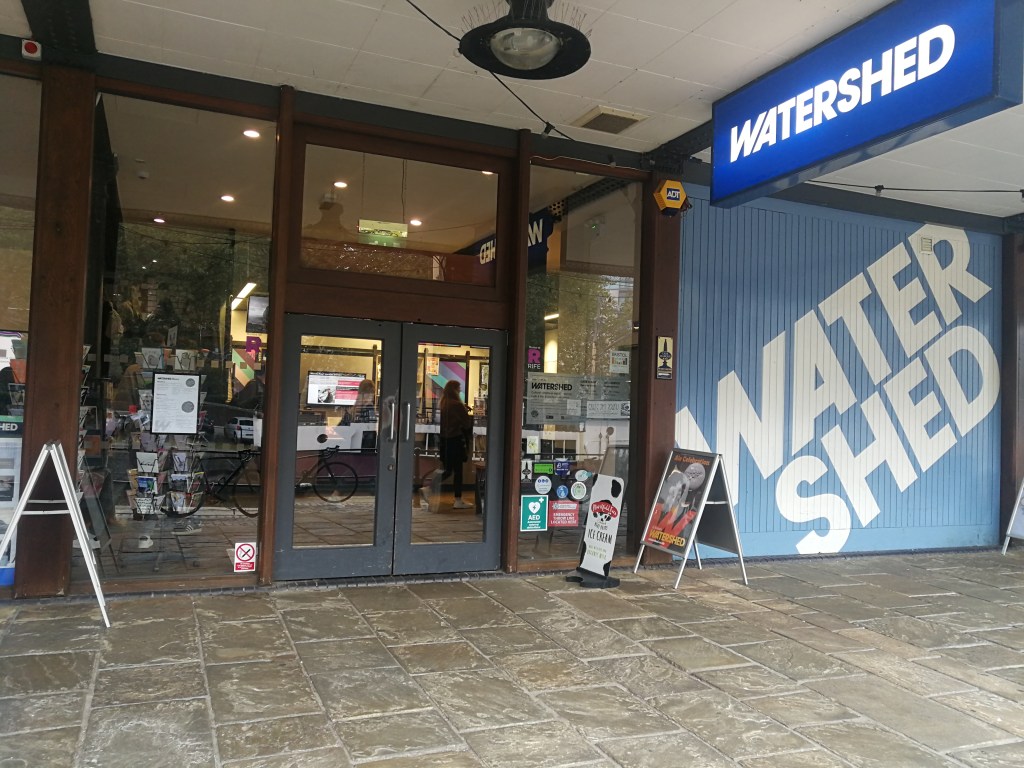
When you step into The Watershed by Bristol’s harbourside, you are immediately met with buzz and the fact that this is no ordinary cinema. In a building once used as a warehouse for trade, the windows in the foyer are large, letting in the brightness and the gaze of many members of the public – who are most probably admiring the bold, rich and extensive colour scheme splashed around the room and on the various furniture, posters, snacks and even cards available for purchase! However, blue seems to dominate the building – perhaps reflecting the ‘water’ theme.
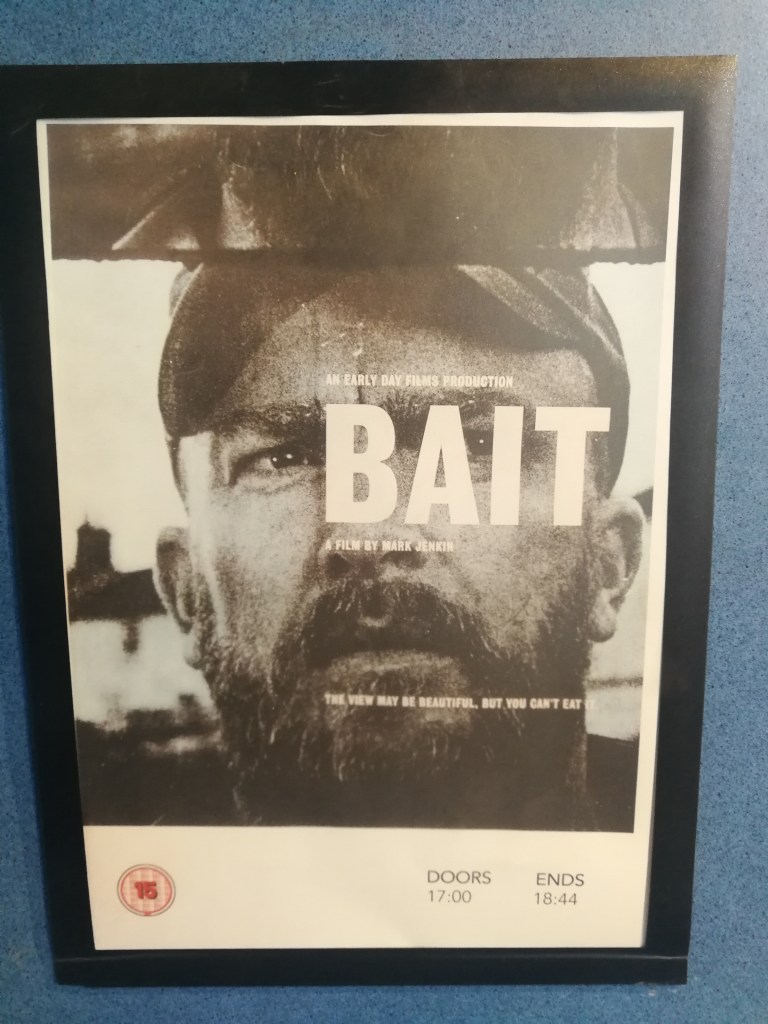
There are many leaflets and posters on every floor that give you information on new releases and Watershed events – as this cinema caters not only to films but everything you could relate to them; art, talks, festivals/events and dining. The films shown and advertised tend to be rich and diverse in culture, with different languages and genres such as Arthouse, Indie and many more that could be considered rather niche today.
As you move on upstairs, there is a board amongst the usual movie posters/art that encourages the cinema goers to write and put up their own opinion on the film they went to see, highlighting that The Watershed has a great level of enthusiasm for embracing and including its target audience. Now, when you’ve actually made it up the stairs – on your right is a Cafe/Bar area which is usually open until late. This provides a way more laid-back and welcoming atmosphere, as you don’t even have to buy a movie ticket to enjoy all independently sourced food/drink they have to offer! This food is not your regular popcorn and diet coke, it is far more rustic, healthy and inclusive of requirements – for example granola, green tea and meals you would associate with restaurants more so than a cinema. However, though not healthy, you can also buy alcohol to drink in the bar or whilst watching a film in the cosy theatres which are red, comfortable and classic, but with the twists of plants dotted around or sweet little movie quotes on the back of every chair.
The decor in the Cafe that watches over the harbour ties in with the rest of the venue, appealing to cinefiles/experts with classic movie posters, up and coming art projects and numerous events including charity. I believe that all of this content combined makes this venue a place of art, and that it embraces an audience who a perhaps more into finer things and want to educate themselves about cinema as a whole – not just a fun night out that you experience on the weekend.
Vue
Vue International is a multinational cinema company, founded in Britain in May 2003. This popular chain is one of a few that dominates our cinema experience in the UK, usually located in a large and modern multiplex. The Vue cinema in Bristol happens to be situated in an extremely popular shopping mall called Cribbs Causeway, and though the theme of this company is orange, it is not really heavily used in their decor – this colour runs almost like a small vein, popping up in the logo on the popcorn boxes, drinks and posters.
Vue cinemas, like this one, showcase Hollywood big budget spectacles, such as Frozen 2 and Knives Out – both westernised, quite generic/relaxed in plot, english speaking movies that are currently being advertised world-wide. The atmosphere within the building matches the content it shows – as it is big, grandiose and appeals to the many rather than a niche group. Food and drink codes are strict, it seems to be frowned upon to bring your own snacks and there is no alcohol allowed in the theatres. You can buy from the ticket desk/foyer area however, as they sell well-known brands of trashy food and drink along side the copious amount of popcorn and icecreams that they offer – though the snacks/beverages are generally considered to be quite a high price for what they are.
Due to all of the money made, Vue offers a rather futuristic experience; 3D/4D viewings, impeccable quality and surround sound, even premium seats and special treatment for those who can afford to pay for it. I would say that this type of experience really does charm the majority of people, the masses. The audience that Vue caters to sees cinema as a night out, a relaxing treat where they don’t have to think about too much, where they and/or their family/friends can recline with food they didn’t have to prepare and watch a movie that they don’t have to give much thought.
Vue International VS The Watershed
In comparison, these cinemas really do differ – this being refected by their content, target audience/market and even their decor.
I believe that whilst lots of people see popular cinemas such as ‘Vue’ for a relaxing treat, independent places such as The Watershed (or even The Ultimate Picture Palace in Oxford where I used to circulate) offer a much more welcoming atmosphere that I can really seep into – from the care they put into their decor like their plants and art, to the laid-back approach to food and drink. I also found the Watershed to be more inclusive, as they show films in lots of languages and in a really extensive range of genres – even touching on sensitive topics with films dedicated to racism, women’s rights and sexuality rather than just your average Hollywood blockbusters that tend have misogynistic undertones and only speak english (like James Bond).
Not only is there a type of inclusivity that touches on large sub-groups of people that need to be heard, but The Watershed positively targets every person that goes into their cinema by asking them to put up their own review for everyone to see, and for them to have feedback also I am guessing. It just makes you feel more listened to and valued as a spectator in their building, your experience is entirely different from the almost corporate feel you get from big chains like Vue or Odeon.
Both are expensive, and differ on some levels but overall it probably would be cheaper not to go to independent places like The Watershed – however it is a matter of what you want to get out of it.
Group Review
by Ellie Griffiths – 19013232
For this assignment, me and two others (Josh and Lucia) formed a group to create a blog and upload our pieces of work. We decided that it would be easier to discuss our concept essay and watershed descriptions together first to make sure that everyone knew what they were doing, and then we proceeded to disperse and complete them individually. I created a group chat on social media so we could update and/or help each other with the work and also just for general communication purposes. Once we had finished our essays, we met in the library and began to plan our blog. Before starting the design process, we double checked our individual work and helped one another with spelling and grammar checking in order to refine and finalise so that we could draw a line under everything and all be on the same page before we moved on.
When it came to the design of our site, we wanted a blog that was aesthetically comparable to the A24 website – this meant a sleek and bold layout in which our content was easily accessible. We decided on the colour yellow for our theme, and agreed on Josh’s name idea ‘Babushka of Genius’. It took a while to place everything correctly as well as put up our pieces of writing, as we found WordPress to be rather difficult to get to grips with and struggled especially with creating the menu and separate pages. Once we got the hang of it, Lucia and I sent Josh our work which he then uploaded onto the site under each of our sections. After finishing the site, we each wrote this 500 word group review to reflect on how it went.
I believe each of us contributed equally and worked with one another well. We always were on the same page and gave one another help and feedback if we needed it. I personally am pleased with my participation as I think this project helped me with my teamworking/communication skills as well as fine-tuned my essay writing. The three of us gave one another feedback on our concept essays also which was extremely beneficial for me personally, and I believe that in future my essay writing skills will definitely be improved. Our IT skills were put to the test, and also was my biggest problem that I ran into in this project – so, upon reflection I would say that it is crucial for me to brush up on them a bit more in preparation for future assignments. To start with communication was slightly rocky but it definitely improved as the deadline approached, so as far as working with my peers goes it was a positive experience.
 Cinemat(ic) Chat